 |
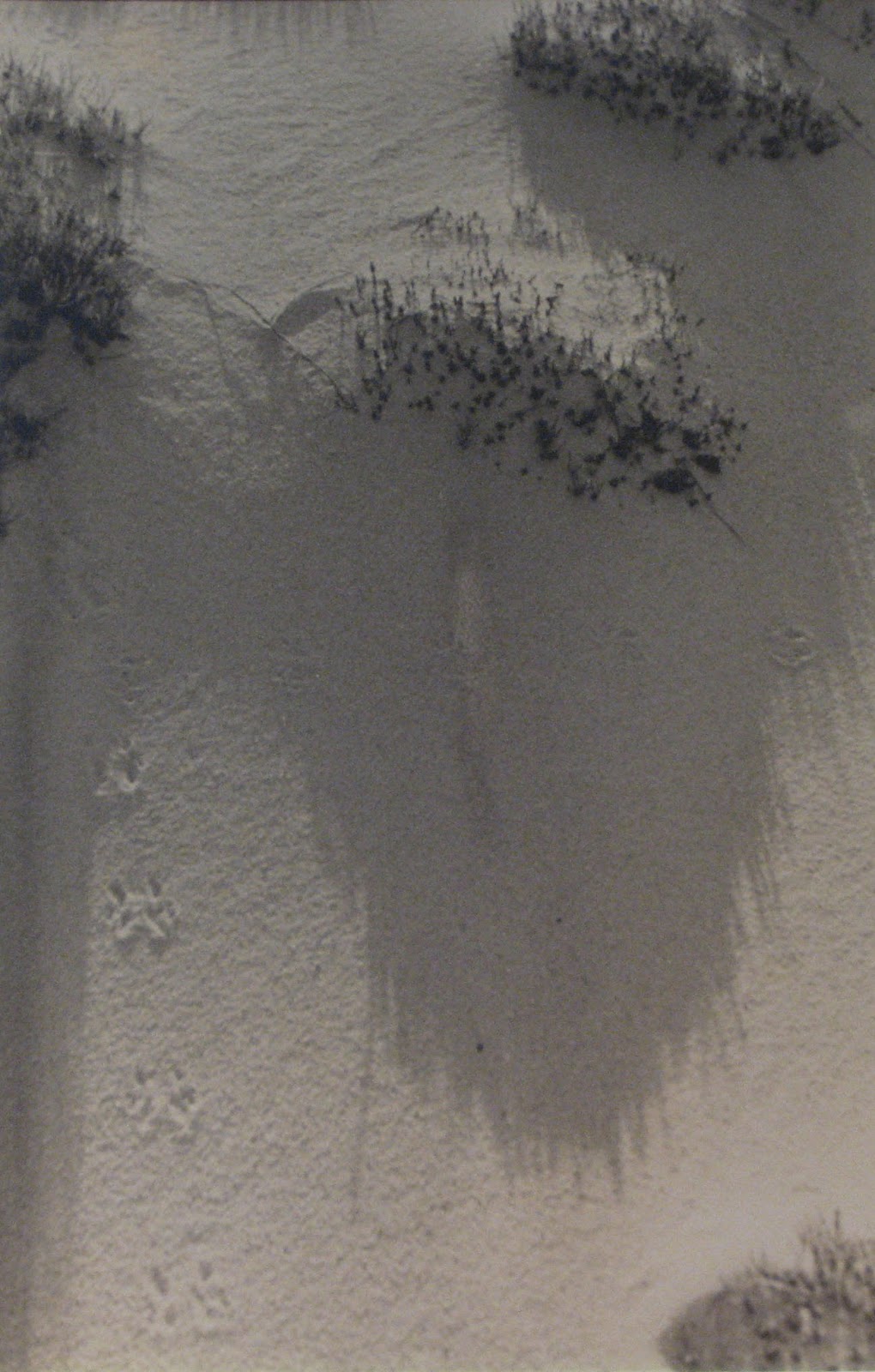
| Sandscape |
Una vez convertida en una actividad factible, con tiempos de exposición
mínimos, la fotografía se amoldó muy bien al devenir del arte de vanguardia, en
el sentido de que fue rechazada por motivos muy similares. Si el impresionismo despertó
suspicacias en un primer momento no fue por sus pinceladas apresuradas sino más
bien por su vulgar realismo, algo que se achacaba de igual modo a la
fotografía: ¿cómo podía llamarse arte a una imagen que no hacía más que
reflejar escenas de la realidad cotidiana? Es cierto que a la fotografía había que
sumarle otra contrariedad, véase su aparente falta de maestría, pues el
sencillo hecho de apretar el disparador era suficiente para obtener el resultado.
No deja de ser curioso que este prejuicio fuera uno de los motivos por los que
las vanguardias plásticas del siglo XX (el arte llamado abstracto
principalmente, pero no únicamente) fueran despreciadas por el consabido tópico
de que “eso lo puede hacer un niño”. Palabras similares pueden oírse hoy
todavía, por lo que a los que un cuadro no figurativo les parece una broma de
mal gusto, una fotografía medianamente “abstracta” debe de resultarles
sencillamente intolerable.
Que el mérito de una obra de
arte no reside en el sudor vertido por el artista es algo que tenía muy claro
José Alemany (Blanes, Gerona, 1895 – Provincetown, Massachusetts, 1951), al que
la galería Guillermo de Osma le dedica ahora una exposición con motivo de
PHotoEspaña. La galería posee la mayor parte del legado del fotógrafo, y ya le dedicó
una muestra hace exactamente dos años. Si algunas de las fotos expuestas entonces
eran de objetos manipulados por el artista, el ingenio de las que se exponen
ahora proviene exclusivamente de la elección del motivo y el encuadre. La
exposición se titula Dunas, pues se
trata de una extensa serie que el fotógrafo dedicó a los paisajes arenosos de
Cape Cod, en la costa este de los Estados Unidos. Alemany se había trasladado a
América en 1917, donde desarrolló una brillante actividad intelectual. Humanista
y pedagogo, impartió clase en el Carnegie Institute of Technology de Pittsburgh,
fue especialista en la obra de Proust, mantuvo una relación epistolar con Stravinsky
y prestó su apoyo a la causa republicana desde América durante la Guerra Civil
española.
A mí cada vez me es más
evidente que, en arte, la diferencia entre lo “figurativo” y lo “abstracto” es
una mera cuestión de terminología y que en ningún caso puede servir como eje
central de un análisis serio. Me gustan especialmente las imágenes de José
Alemany porque caminan magistralmente sobre la molesta frontera entre ambos
terrenos. Sus fotografías recogen, qué duda cabe, elementos de la naturaleza,
pero se nos muestran más allá de su mera apariencia objetiva. Las dunas podrían
parecer en un primer momento un motivo con escasas posibilidades estéticas más
allá de la ondulación de la arena recortada sobre el cielo. El mérito de
Alemany reside precisamente en lo que es
capaz de descubrir entre esa inmensidad aparentemente homogénea. Además de
recrearse en las sombras que la arena proyecta
sobre sí misma, magnifica detalles mínimos como la pequeña vegetación que crece
en ella o los sugerentes charcos dejados por la lluvia. Hay también lugar para jugar
con los títulos, creando equívocos irónicos. Sin duda, la fotografía es para
Alemany el arte que nos muestra aquello que tenemos delante de los ojos pero que
no somos capaces de ver.
El catálogo de la exposición
merece una mención aparte. En él encontramos un artículo del propio Alemany,
publicado originalmente en The Carnegie
Magazine en 1937. El texto no es largo pero tiene mucha miga. Partiendo de
la celebración en Pittsburgh de dos grandes exposiciones, Alemany acaba
haciendo un verdadero elogio del arte de la fotografía. Lo hace, en buena parte,
en comparación con la pintura,
incurriendo, no sé si conscientemente, en una relectura total de la historia de
las vanguardias. Alemany propone aquí que todas las transgresiones acometidas
por la pintura desde los impresionistas son una reacción a la fotografía, pues
la pintura como representación objetiva de la realidad no tiene sentido cuando una
cámara puede hacerlo de manera mucho más rápida y precisa. Esta teoría puede
ser todo lo discutible que uno quiera, pero lo cierto es que casi siempre se
omite, por molesta, la influencia, pequeña o grande, que la fotografía debió de
ejercer sobre el devenir revolucionario de las artes plásticas. Sin duda es un
tema que merece mucha más atención de la que de momento ha recibido por parte
de la historiografía artística.
Los argumentos de Alemany
tienen como objetivo siempre la reivindicación de la fotografía, nunca el
desprestigio de la pintura. La coexistencia pacífica entre ambas pasaría, para él,
por definir el campo de acción de cada una. “La pintura debería ser el arte de
la invención, y la fotografía pictórica el arte del descubrimiento,” sugiere. Su
fotografía es, sin duda, buena muestra de ello y, desde luego, no tiene nada
que envidiar a la pintura en cuanto a categoría artística. Al fin y al cabo, y
como él mismo dice, “los seres humanos no admiran menos a los descubridores que
a los inventores”.
José Alemany. Dunas. Guillermo de Osma Galería. Claudio Coello, 4. Madrid. Hasta
el 20 de julio.
 |
| Sin título
The art of discovery
Once it became a practicable
activity, with very short exposures, photography adapted very well to the evolution
of avant-garde art, in the sense that it was rejected for similar reasons. If
Impressionism aroused suspicions at the beginning it wasn’t because of its
quick brushstrokes, but rather because of its plain and vulgar realism, the
same as photography: how could an image of plain everyday life be considered
art? The truth is photography had an additional setback: its apparent lack of
mastery, since a press of the shutter release was enough to obtain the result.
It’s curious to see how this prejudice was one of the reasons the avant-gardes
of the 20th century (mainly abstract art, but not only) were rejected
with the cliché of ‘even a child can do it.’ Similar words can still be heard
today, so I suppose that for someone who thinks of non-figurative painting as a
bad joke, a relatively ‘abstract’ photograph must be simply intolerable.
José Alemany (Blanes, Girona, 1985 - Provincetown, Massachusetts, 1951)
knew very well that the quality of a work of art is not a question of how much
sweat the artist has put into it. As part of PHotoEspaña 2012, Guillermo de
Osma gallery dedicates an exhibition to this photographer, of whom they possess
the majority of works. The title of the show is Dunes, since it presents a series dedicated to the sandy landscapes
of Cape Cod, in the east coast of the United States. Alemany had emigrated to
America in 1917, where he developed a brilliant intellectual career. A humanist
and an educator, he taught at the Carnegie Institute of Technology in
Pittsburgh, was an expert in the work of Marcel Proust, maintained an
epistolary relationship with Igor Stravinsky and gave aid to the republicans
fighting the Civil War in Spain.
To me it’s ever more obvious that, in art, the difference between the
‘figurative’ and the ‘abstract’ is a mere question of terminology that can, in
no case, serve as the main theme for any serious artistic analysis. I like José
Alemany’s photos precisely because they walk the annoying frontier between the
two areas. His photographs portray elements from nature, but they are shown to
us in ways that go further than their solely objective appearance. Dunes could
seem, at first, a subject with apparently few aesthetic possibilities.
Alemany’s merit resides in what he is capable of discovering amongst that
homogenous immensity. Apart from revelling in the shadows the sand projects on
itself, he magnifies minimal details, such as the small vegetation that grows
on it or the suggestive puddles left by rain. There’s also room for playing
with titles, giving way to ironic misunderstandings. For Alemany, photography
is, without doubt, the art form that shows us the things we have before our
eyes but are incapable of seeing.
The catalogue of the exhibition deserves a special mention. In it we
find an article by Alemany himself, originally published in ‘The Carnegie
Magazine’ in 1937. The text isn’t long but is full of interest. Starting with
two exhibitions taking place in Pittsburgh, Alemany goes on to write a true
praise of photography. He does it, mainly, by comparing it to painting and, in
so doing, ends up in a whole new lecture of the history of the avant-gardes.
Alemany proposes that all the transgressions made by painters since the
Impressionists were a reaction to photography, since painting as an objective
reflection of reality makes no sense when a camera can do it quicker and more
precisely. This theory can be all the controversial one likes, but the truth is
the influence of photography on the revolutionary advance of the arts, however
big or little, is nearly always taken for granted. It’s, without doubt, a thing
that deserves much more attention than it has received so far in art history.
Alemany’s arguments always have
the objective of praising photography, never of discrediting painting. Their
peaceful coexistence depends, for him, on defining the areas on which the two
arts act. ‘Painting should be the art of invention, and photography the
art of discovery,’ he suggests. His photography is, no doubt, a good
demonstration of this and by no means lacks painting’s artistry. After all, as
he himself puts it, ‘human beings don’t admire discoverers less than they do
inventors.’
José Alemany. Dunes. Guillermo de Osma Gallery. Claudio Coello, 4. Madrid. Until
20th July.
|

